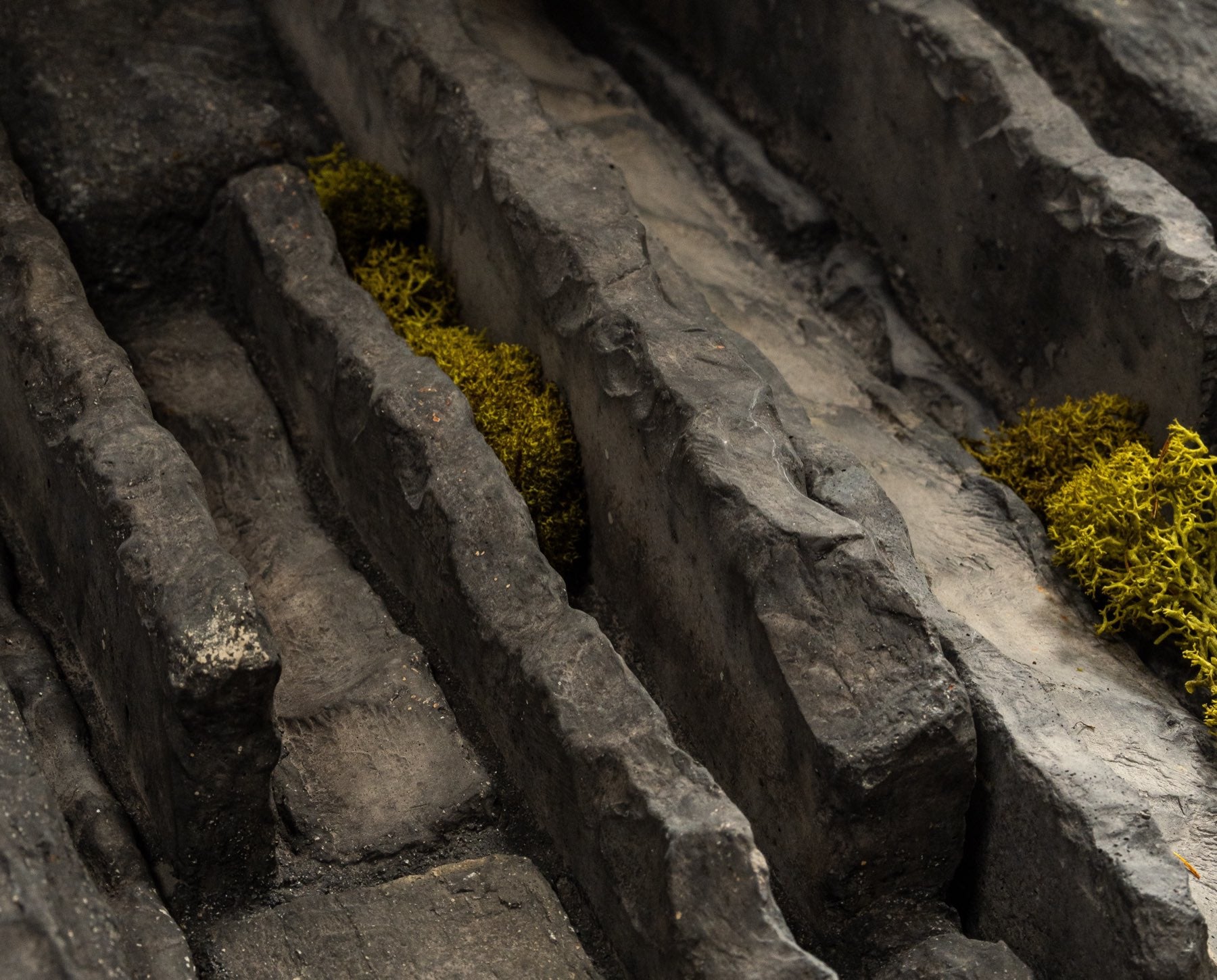
There's a reason designers keep returning to weathered materials when they want a project to feel earned. A home on Martha's Vineyard recently made headlines for the way it channels the island's rustic character — not through imitation, but through material honesty. Rough-hewn textures. Layered tones pulled from the landscape. A sense that the structure has always belonged exactly where it stands.
That instinct — to root a building in its place — is driving some of the most compelling residential and commercial work happening right now in Texas and Florida. And increasingly, the material doing that work is manufactured stone veneer, chosen not as a shortcut, but as a precision design tool.
Coastal vernacular architecture has never been purely about proximity to water. It's about responding to environment — to light, to humidity, to the particular way a region weathers over time. In Florida, that means materials that hold up to salt air and intense UV without sacrificing warmth. In Texas Hill Country and along the Gulf Coast, it means stone that looks like it was pulled from the land itself.
This is exactly where high-quality manufactured stone veneer earns its place in the specification conversation. When the profile, colorway, and texture are dialed in correctly, the result isn't "looks like stone." It is the visual and tactile experience of stone — with the dimensional consistency and installation efficiency that natural quarried material simply cannot match at scale.
The most important choice a designer makes when specifying stone isn't the color — it's the profile. Texture is what determines how a surface reads at distance, how it catches light at dusk, and how it ages visually over decades.

MIXOLOGY Foothill Rubble Coyote + Farmhouse Ledge Coyote
Farmhouse Ledge delivers the kind of deeply stratified horizontal layering that reads as geologically authentic from the street. It's a profile that works equally well on a coastal Florida estate exterior as it does wrapping a Texas ranch fireplace surround — the elongated planes create shadow lines that shift with the sun throughout the day.

Peak Ledge Greypearl, Builder - Thrive Communities, Interior Design - Thrive Communities, Photography - Adam Grubb Media
Peak Ledge takes that layered logic and pushes it toward something more angular and dramatic — ideal for projects where the architecture has strong geometric intent and the cladding needs to hold its own.

Orchard Limestone Greypearl, Builder - Modern Nest | @modern_nest, Interior Design - Modern Nest | @modern_nest, Photography - Kate Bohannan Studio | @katebohannan.studio
For projects leaning into a softer, more refined coastal palette, Orchard Limestone and Greypearl offer the muted, chalky warmth of aged sedimentary stone. These are materials that photograph beautifully in natural light and wear their neutrality with intention — they don't compete with a view, they frame it.
The most sophisticated projects treat stone as a continuous material conversation — starting at the exterior entry, moving through a great room fireplace, and carrying into a primary suite accent wall. That continuity is what separates a designed home from a decorated one.

Cannery Brick Arcticdrift
Cannery Brick has become a go-to for designers who want to introduce an industrial-warm counterpoint inside a predominantly stone exterior. The slightly irregular coursing and matte finish read as authentic reclaimed material without the sourcing uncertainty of actual salvage brick.

Split Modular Powder
Split Mod offers a cleaner, more contemporary interior application — the split-face texture catches light differently than smooth surfaces, adding depth to an accent wall without visual noise.
Both Texas and Florida present real challenges for exterior cladding. UV intensity, thermal cycling, humidity, and in coastal zones, salt-laden air — these aren't hypothetical concerns. They're the reason specification decisions matter.
Creative Mines products are engineered for these conditions. The concrete-based composition is dimensionally stable, and the integral color system means the surface tone is consistent through the material, not applied as a coating that can degrade or peel. For architects and builders specifying in these markets, that's not a minor detail — it's the difference between a project that holds up and one that calls you back.
The best way to understand how a stone profile will perform in your specific project context is to see it at scale, in natural light, against your other material selections. That's what StudioMine is for.
Whether you're early in schematic design or finalizing a material palette, our team works directly with architects, designers, and builders to identify the right product, profile, and color for the project — and to provide samples and technical documentation for your spec package.
Your First Online Order
Bring your vision to life. Set up your Creative Mines account and receive up to 10% off your first online order.
Your cart is currently empty
Start typing to see results


 Join Our Trade Program
 Resources
 Order
Order  Commercial Projects