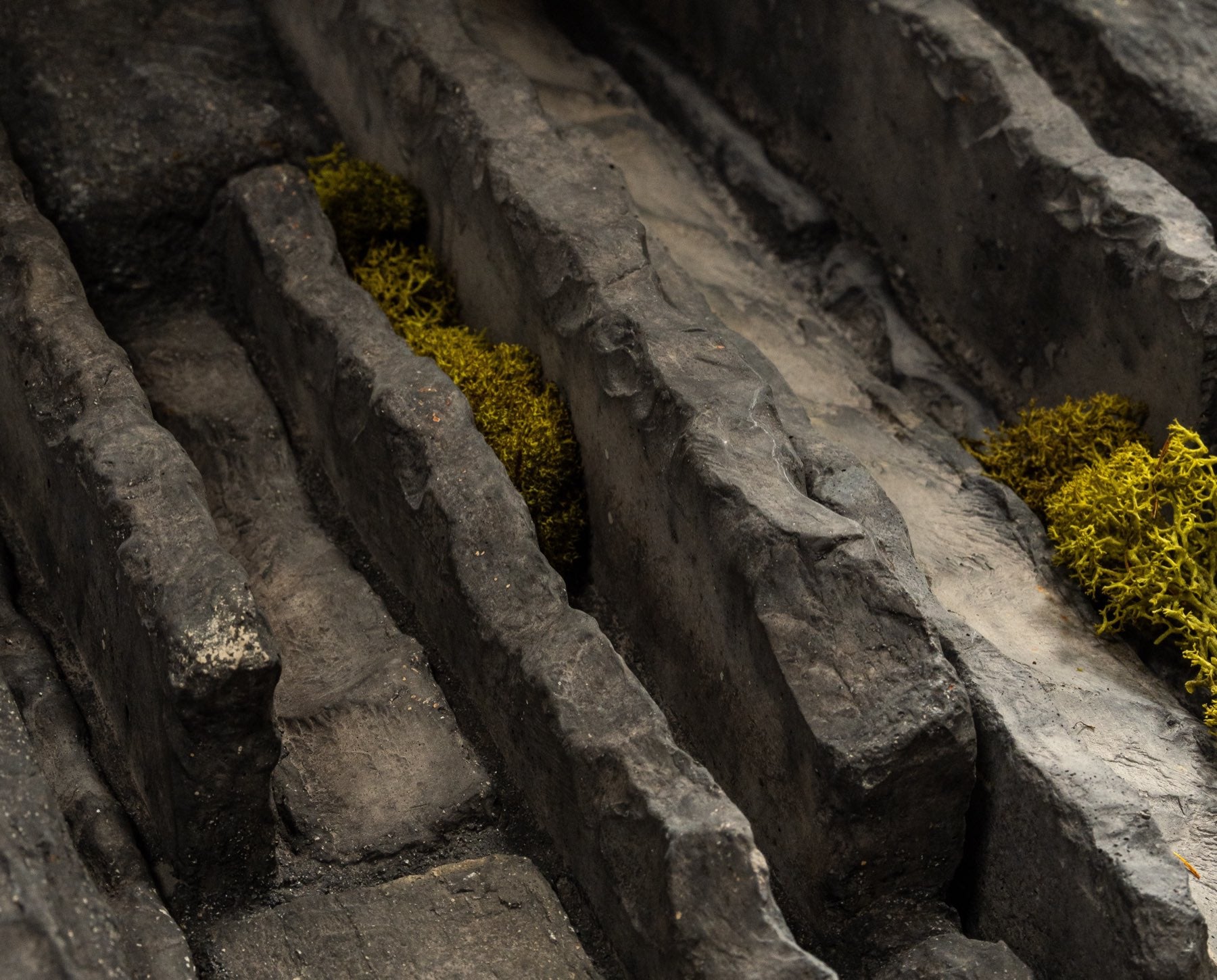
Large-scale architecture can feel impersonal when its size isn't balanced by material depth and tactile detail. Whether a building extends across a broad site or rises vertically, texture helps break down its scale, creating a more human, inviting, and visually engaging experience.
At that scale, material choice moves beyond function and cost to become a decision that shapes the character of the design.
Stone has long helped large buildings feel grounded, durable, and connected to their setting, from historic and religious architecture to contemporary homes shaped by their local landscapes. For today’s architect, the question is not whether to use stone, but how to specify it with intention.
When designers talk about stone, the conversation usually starts with color. That's understandable, but texture is what stands out to the eye from twenty feet away. It's what determines whether a facade reads as grounded or flat, curated or generic.
Take two products from opposite ends of the texture spectrum: Farmhouse Ledge and Split Modular. Farmhouse Ledge offers deep, stratified horizontal lines that pull the eye across a surface, ideal for long, lower structures where you want to emphasize the building’s length without it feeling flat or repetitive. Split Modular delivers a cleaner, more geometric break pattern that helps visually support height and create a more tailored appearance.

At a larger scale, Urban King extends this relationship between texture and architecture. At 12" x 24", its oversized rectilinear form establishes a strong horizontal rhythm and gives expansive commercial and multifamily elevations the visual weight they demand. In Winterfall, a cool palette of light gray and ash gray with subtle brighter highlights brings dimension to the split-faced surface while complementing the community’s dark contemporary architecture. Here, the scale, geometry, and restrained color of Urban King help set the stage for a luxury townhome community, grounding the architecture with a refined, substantial presence that feels integral to the design rather than simply applied.


One of the more sophisticated moves in high-end residential and hospitality design right now is dissolving the threshold, where the exterior and interior flow together in a seamless transition. Stone veneer is one of the few cladding materials that can perform equally well indoors and out.
Orchard Limestone is a strong example of a material that can create continuity between exterior and interior spaces. Its soft, quarried texture feels refined on feature walls, fireplace surrounds, and lobby cladding, while its UV stability and weather resistance make it equally suited to exterior applications in any climate. For example, use it at an interior fireplace and carry the same profile onto an adjacent exterior wall or patio to create a harmonious connection between the home’s interior and outdoor living spaces.

Some states present demanding conditions that narrow the field of viable cladding materials. High UV exposure, coastal humidity and moisture, mountain freeze-thaw cycles, and desert temperature extremes all place distinct demands on exterior materials. Therefore, material selection affects how a facade weathers, performs, and endures over time, not just how it looks.
Manufactured stone veneer, properly specified and installed, addresses those constraints directly. Creative Mines products are engineered for dimensional stability and are significantly lighter than natural cut stone, reducing structural load on wall assemblies, a real advantage when you're working with wood-frame construction.
Mesa Modern has been a consistent performer in exterior applications across many states. Its profile sheds water efficiently, and its color palette holds up under sustained sun exposure without the fading that can affect less durable manufactured materials.

The best stone specifications happen early. They should be considered during schematic design, when decisions about facade proportion, texture, color, and scale are still taking shape. Waiting until construction documents to select stone veneer is how projects end up with a material that meets technical requirements but feels disconnected from the overall design.
That is why it is important to get stone samples early in the design process, before the material palette is finalized, elevations are rendered, and the design is presented to the client.
Ready to Specify?
We are here to help; please reach out to request samples or order samples today online at www.creativemines.us. If you’re a Trade Professional, make sure to join our Trade Program StudioMine. StudioMine offers access to purchase at discounted prices depending on the region you are located.
Your First Online Order
Bring your vision to life. Set up your Creative Mines account and receive up to 10% off your first online order.
Your cart is currently empty
Start typing to see results


 Join Our Trade Program
 Resources
 Order Samples
 Commercial Projects