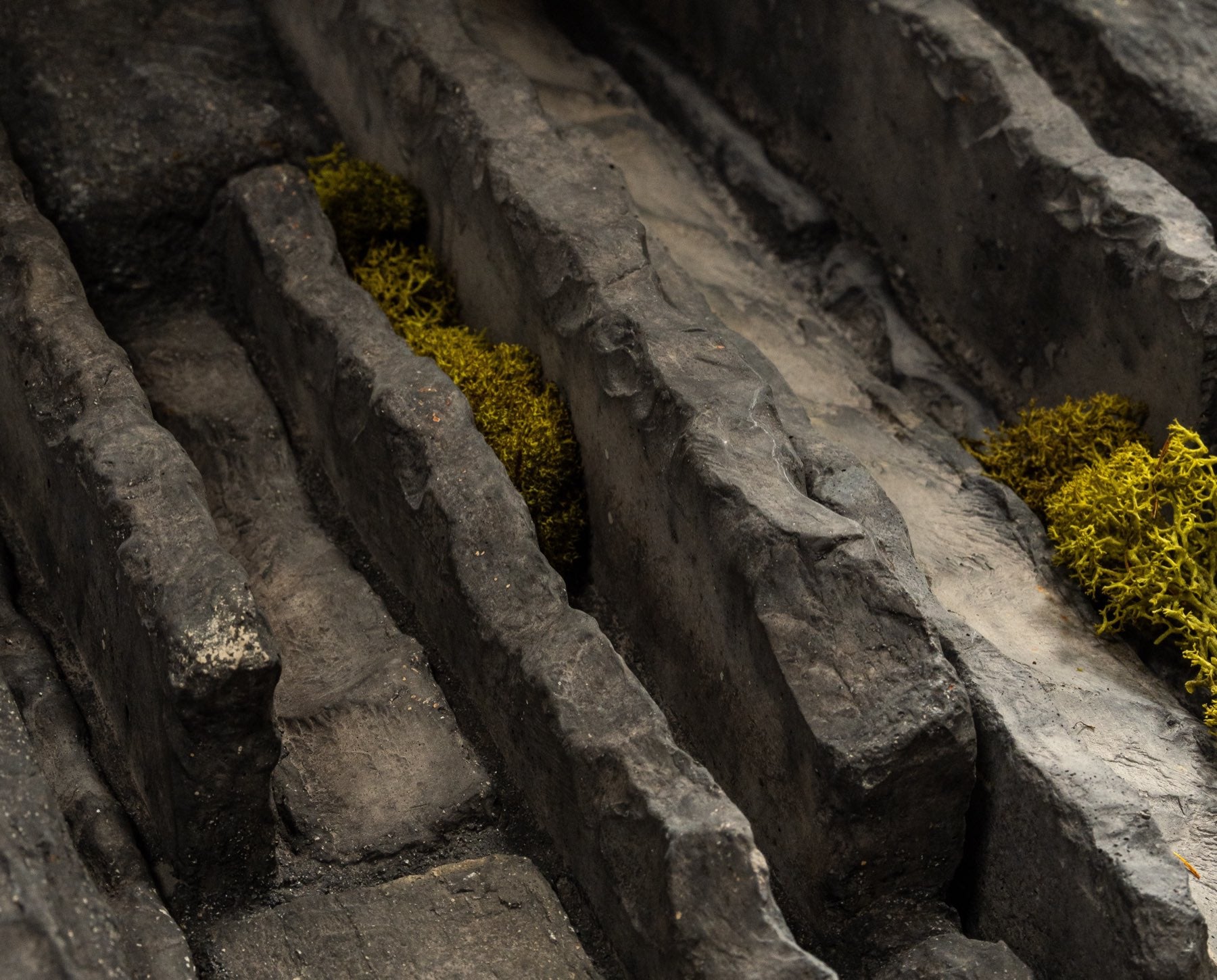
Architects love the way real stone looks. Budgets, structural engineers, and installation schedules have a different opinion.
That tension has shaped American exteriors for as long as we've built with stone at all — from adobe walls to Prairie-style fieldstone. The buildings that hold up, generation after generation, are the ones built from something that feels rooted to its site. Stone has always been part of that instinct. What's changed is how designers get there.

A building should feel like it grew out of its site, not like it was set on top of it. That principle hasn't changed. What's changed is the toolkit available to get there.
Manufactured stone veneer has moved past the "fake stone" reputation it used to carry. Cast from actual stone molds, colored with iron oxide pigment, and finished by hand, the better products today carry real visual and textural depth at a fraction of the structural load of quarried stone. For architects working on luxury residential and commercial projects across Texas and Florida, that matters in concrete terms: substrate compatibility, load calculations, and the cost of moving and installing natural stone are real constraints, not abstractions. Manufactured veneer solves for all three without asking you to compromise the design.

Clients want depth. They want a wall that reads differently at 8 a.m. than it does at golden hour. They want a material that looks like it's accruing character rather than just aging.
Farmhouse Ledge, in its darker, more mineral-forward colorways, is showing up on exterior cladding across the Texas Hill Country — anchoring a home to its limestone-rich surroundings without importing actual limestone by the ton. The irregular coursing catches shadow well; no two elevations read quite the same.
For projects with cleaner geometry and more contemporary reference points, Split Mod delivers a precision-cut profile with a warmth that polished concrete can't provide. It photographs well too, which matters when project photography is doing some of the work of landing the next commission.

In luxury residential work, exterior cladding isn't decoration — it's the first material argument a building makes about everything that follows inside. Specify something thin and unconvincing, and the client's already lost some trust before they reach the front door.
Peak Ledge and Orchard Limestone are the two lines architects keep returning to for high-end exteriors in Florida's coastal markets. Peak Ledge brings a verticality and dimension that plays well against the horizontal lines common in contemporary coastal architecture — the contrast reads as intentional. Orchard Limestone has a softer, more European hand that sits naturally against the stucco and smooth render common across South Florida's luxury corridor.

The strongest projects carry the material language from exterior to interior. A home clad in Greypearl on the facade that picks up a Greypearl fireplace surround in the great room isn't being repetitive. It's being coherent — and that coherence is what separates a designed home from a decorated one.
Cannery Brick deserves a mention here too, particularly for interior commercial work: hospitality, restaurants, boutique retail. A well-chosen brick profile in a dining room or hotel lobby does something tile and millwork can't. It grounds the space in something that reads as genuinely made, not applied.

Creative Mines maintains a full sample library and works directly with architects, designers, and specifying contractors across Texas and Florida. If you're early in a project and want material in your hands before committing to a spec, request samples through our website or visit Studio Mine to see full-scale installations in context.
→ Request samples at creativemines.us → Browse the Farmhouse Ledge, Peak Ledge, Orchard Limestone, Split Mod, Greypearl, and Cannery Brick product pages for full spec sheets and installation details.
Your First Online Order
Bring your vision to life. Set up your Creative Mines account and receive up to 10% off your first online order.
Your cart is currently empty
Start typing to see results


 Join Our Trade Program
 Resources
 Order
Order  Commercial Projects